What Is Kratom, Actually?
Kratom (Mitragyna speciosa) is a tropical tree native to Southeast Asia. Its leaves have been used in traditional preparations for centuries. Natural kratom leaf is a botanical product, not a synthetic drug.
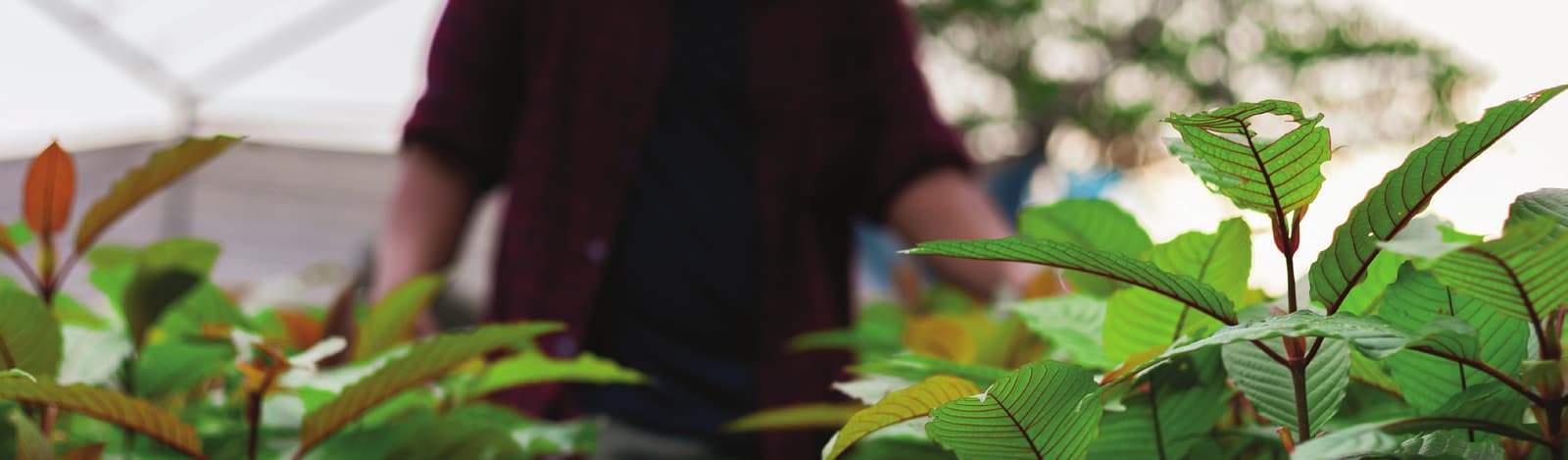
The primary active compound in kratom leaf is mitragynine. Mitragynine is a partial opioid receptor agonist, meaning it activates opioid receptors in the brain but differently from full opioid agonists like oxycodone, morphine, or fentanyl. At lower doses, people commonly report increased alertness and energy. At higher doses, effects shift toward relaxation and pain relief. Research on kratom's full pharmacological profile is ongoing.
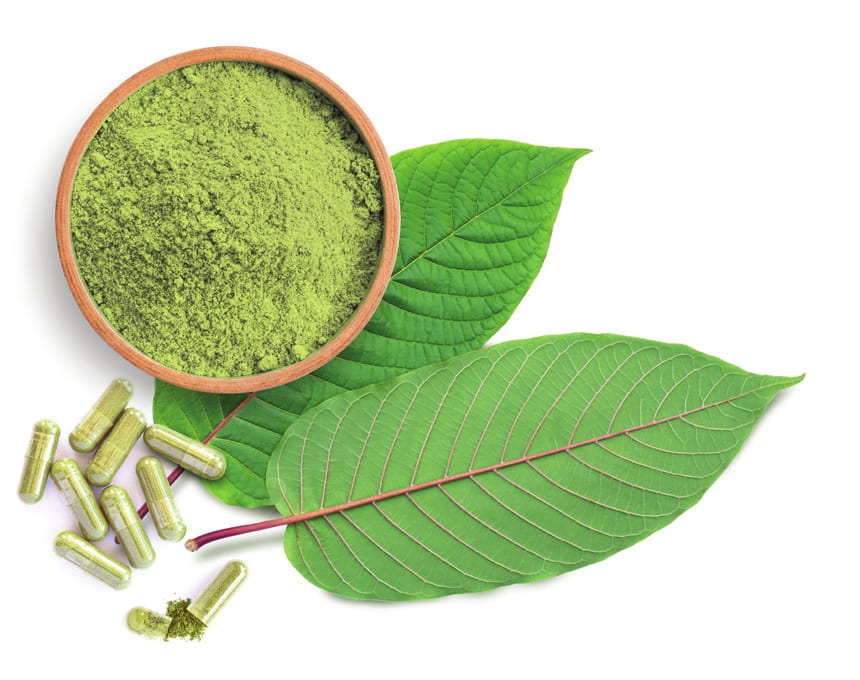
Natural kratom leaf is typically sold as raw powder, capsules, or pressed tablets. It is intensely bitter in its unprocessed form. The botanical definition that matters for this guide: kratom is kratom when it reflects the natural balance of alkaloids produced by the plant, with mitragynine as the dominant compound, and 7-OH present only at the trace levels that occur after the leaf is harvested. When processing concentrates, isolates, or chemically modifies that alkaloid profile, the result is no longer kratom in any meaningful botanical sense, regardless of what the label says.
The term kratom is often misapplied. At one end of the spectrum is natural kratom leaf with a long history of traditional use. At the other end are products that are processed, concentrated, or chemically modified in ways that produce a substantially different compound; these are not kratom. Understanding that distinction is the foundation of everything else in this guide.
The National Institute on Drug Abuse (NIDA) is currently sponsoring the first human clinical trial of purified mitragynine as a potential treatment for opioid use disorder: a signal that federal researchers take the pharmacological distinction seriously.
Not Everything Called Kratom Is Natural Kratom
Not everything sold as kratom is kratom. True kratom (Mitragyna speciosa leaf reflecting the plant's natural alkaloid balance) contains mitragynine as the dominant compound. 7-hydroxymitragynine (7-OH) is not produced by the plant itself; it forms in trace amounts when some mitragynine oxidizes after the leaf is harvested. Some items on store shelves are formulated or processed to contain semisynthetic 7-OH at concentrations far beyond what post-harvest oxidation could ever produce. Others contain fully synthetic products with no meaningful connection to the plant at all. Neither category is kratom, regardless of how the label reads.
Products with elevated or manipulated 7-OH content likely carry higher opioid-like risk and should not be treated as equivalent to natural kratom leaf. No case of fatal respiratory depression has been attributed to natural kratom leaf in humans. Products containing semisynthetic 7-OH or other synthetic alkaloids may carry substantially higher opioid-like risk, including overdose risk.
What to look for
- Raw powder, capsules, and pressed tablets: minimally processed natural kratom leaf. Green or brownish in color. Intensely bitter in its raw form.
- Liquid extracts and shots: There are natural full‑leaf kratom extracts. Some products contain isolated‑alkaloid concentrates- these are not kratom. Certain products also include botanicals like kava. The safety of the combination of kratom extracts used with kava is not well studied.
- Items falsely labeled as kratom: some products claim to be kratom but contain semisynthetic or fully synthetic compounds with no meaningful connection to the plant. The synthetic alkaloid space is not limited to 7-OH; chemists have produced other synthetic compounds designed to interact with opioid receptors, some with no established safety data whatsoever. A product containing any synthetic or semisynthetic alkaloid is not kratom and should be treated as an unknown substance.
- Gummies, candies, edibles, and flavored powder packets: these formats almost always contain semisynthetic 7-OH, which is not kratom by any botanical definition. They are the formats most commonly sold with youth-targeted branding and should not be referred to as kratom.
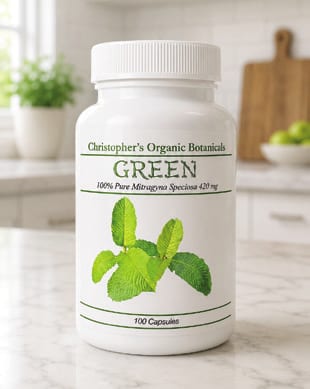
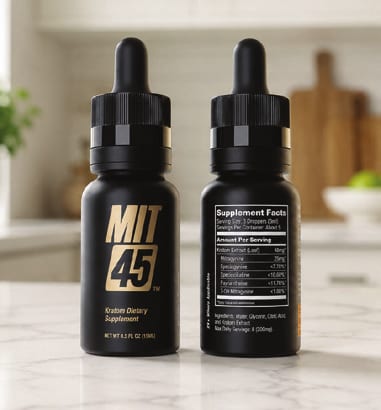
Properly labeled with warnings, directions for use, and disclosed alkaloid levels.
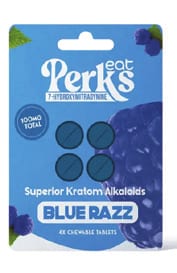

Name mimics opioids or medication, contains semisynthetic 7-OH or synthetic mitragynine analogues (e.g. pseudoindoxyl, MGM-15, MGM-16), or is sold in inhalable/injectable form.
Many items falsely sold as kratom, particularly concentrated 7-OH substances, are packaged as gummies, candies, drink mixes, and flavored shots in brightly colored packaging designed to appeal to young people. These bear no resemblance to natural kratom leaf and are not kratom by any botanical definition. Federal health officials and state attorneys general have specifically identified this packaging and marketing as cause for concern.
How to assess a product you've found
If a young person has consumed any unfamiliar product, contact a healthcare provider or poison control (1-800-222-1222) right away. Do not wait to see if symptoms develop. Bring the product and its packaging so the provider can see the label and ingredients. Also tell the provider that a Certificate of Analysis (COA) may be available: a document from an independent laboratory listing exactly what compounds are in the product and at what levels, along with any contaminants detected. Responsible manufacturers make their COA accessible via a QR code on the packaging, on their website, or by phone. Sharing that information with the provider will help them determine the appropriate level of concern and guide treatment.
Why Age Restrictions on Kratom Matter
The human brain continues developing well into early adulthood. During adolescence and young adulthood, the brain is actively building the neural connections that govern decision-making, emotional regulation, and long-term cognitive function.
Substances that bind to receptor systems in the brain — including opioid receptors — can interfere with this process. Mitragynine, the primary active compound in kratom, partially binds to opioid receptors. Human studies on what that interaction means during active brain development do not exist and could not ethically be conducted. That gap in the science is itself the basis for caution.

Neuroscience research indicates that brain development continues well into a person's twenties, with some recent research suggesting it continues even later. This is the evidence base underlying age restrictions on kratom.
This is not a statement that kratom is inherently dangerous for adults. It is a recognition that a developing brain deserves extra protection and that responsible kratom policy begins with protecting young people.
What Protects Young People?
Research on adolescent substance use consistently finds that certain caregiver behaviors function as protective factors, not guarantees, but meaningful buffers. The most effective of these are things you are likely already doing or can strengthen with intention.

Protective factors you can actively build
- Knowing where your child is and who they spend time with
- Open, non-judgmental communication about substances at home
- Strong connection and relationship quality between parent and child
- Consistent, clear expectations about substance use
- Involvement in your child's school life and academic progress
- Encouraging participation in structured activities and positive peer groups
- Awareness of your child's mental health and emotional wellbeing
- Seeking support if your own substance use is a concern
These are not risk factors in disguise. They are genuine strengths that caregivers can build. The research shows that parental monitoring and relationship quality are among the most powerful predictors of adolescent substance use delay — more powerful than most educational programs.
When to Have the Conversation
You do not need to wait for a crisis to talk with a young person about kratom. The most effective conversations happen before there is a problem. A few situations are natural openings:
You find an unfamiliar product
What is sold as kratom spans a wide spectrum. Only some of it is actually kratom. Understanding what you have found matters before deciding how to respond — see the formats described above (raw powder, liquid shots, gummies and edibles).
If a Young Person Has Used an Unfamiliar Product: Act Immediately
If a young person has consumed any unfamiliar product, contact a healthcare provider or poison control (1-800-222-1222) right away. Do not wait to see if symptoms develop. Bring the product and its packaging so the provider can see the label and ingredients. Also tell the provider that a Certificate of Analysis (COA) may be available. Sharing that information with the provider will help them determine the appropriate level of concern and guide treatment.
A young person mentions kratom by name
Curiosity is normal. If a young person brings it up because they heard about it from a peer, saw it in a store, or encountered it online, that is an opening, not an emergency.
You notice changes you cannot explain
No single behavioral change points specifically to kratom or to any one substance. But unexplained shifts in sleep, mood, school performance, or social connection are always worth a calm conversation and a check-in with a healthcare provider if the pattern continues.
Something a young person has consumed is making them unwell
If a young person becomes ill after using any unfamiliar product, substance, or supplement, seek medical attention and bring the product or its packaging with you. This guidance applies broadly to unknown substances, not to kratom specifically.
You do not need certainty to act. You need a relationship strong enough to ask.
How to Talk to a Young Person About Kratom

You do not need to be an expert to have this conversation. You need to be honest, calm, and willing to listen.
- Lead with curiosity, not accusation. "Have you heard of kratom?" opens a conversation. "Are you using kratom?" closes one. Starting with what they know rather than what you suspect creates space for honesty.
- Use the brain development science, not fear. Young people respond better to "your brain is still building its long-term decision-making wiring" than to exaggerated danger claims. Overstating risk to scare a young person typically backfires when they encounter accurate information elsewhere.
- Be honest about what is and is not known. It is fine to say that researchers do not yet fully understand how kratom affects a developing brain. That honesty builds trust and models good scientific reasoning.
- Acknowledge that adults use it differently. Many adults use natural kratom leaf responsibly, including for pain management and to support recovery from opioid use. Explaining that distinction — an adult brain has finished developing; a young brain has not — is not a double standard. It is the science.
Make it safe to come back to you. The goal of any one conversation is not to end the topic. It is to make sure a young person feels comfortable bringing it up again. That ongoing relationship is the protective factor the research consistently identifies as most important.
SAMHSA's Talk. They Hear You. campaign (samhsa.gov) offers conversation guides for parents and caregivers talking to young people about substances. The framework translates directly to conversations about kratom.
Resources
If you need immediate help
For more information on kratom science
Legal landscape
The Kratom Consumer Protection Act (KCPA), adopted in several states, defines kratom as natural Mitragyna speciosa leaf with no more than 2% 7-hydroxymitragynine content or 1 mg per serving. Products exceeding that threshold are not kratom under this definition regardless of how they are labeled. The KCPA also sets minimum age requirements for purchase and prohibits products containing synthetic alkaloids. The KCPA language varies from state to state; check your state's current kratom regulations at americankratom.org.